
JUST WALK OUT RFID CHECKOUT lane
Co-founder and systems architect of Amazon's RFID-based checkout platform — from no mandate or team to two platforms and five hardware iterations, scaling to 150+ lanes deployed across stadiums, arenas, and events in the US and UK
Source: AWS re:Invent 2024 BIZ226 — Streamlining autonomous checkout for retail with RFID
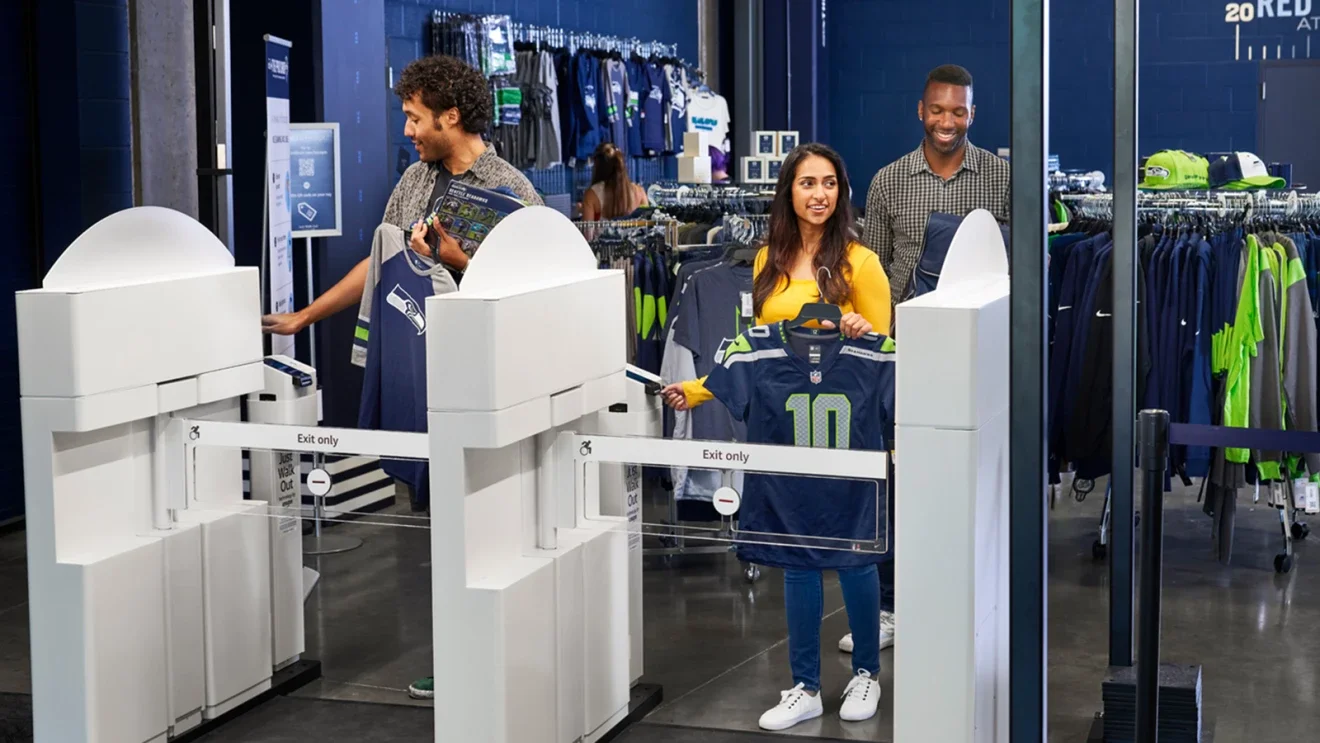
Gen 1 JWO RFID Lane at Seahawks Pro Shop Outlet at Lumen Field · Source: aboutamazon.com
The problem
Just Walk Out technology has enabled checkout-free retail since 2018 using cameras and AI. It works reliably for packaged goods — items with consistent geometry and defined shelf positions. Clothing is a different problem entirely.
Garments fold, get tried on, and move throughout stores in ways cameras can’t reliably track. You can’t vision-solve your way to a receipt when someone walks out with a hoodie balled up under their arm.
RFID solves this. Every item carries a passive UHF tag. When a customer exits through the lane, readers detect every tagged item in the read zone simultaneously — no scanning, no line, no interaction required. But reliable multi-tag read across all exit orientations, in the presence of RF-absorbing human bodies, across adjacent lanes that each need to attribute items to exactly the right account — that’s a real engineering problem. This page covers how we solved it, and what it took to get from a Kraken playoff pilot to a globally deployed platform.
MY Role
I co-founded the JWO RFID Lane alongside a Principal Software TPM — no team, no budget, no mandate. What started as an unfunded R&D effort grew into one of Amazon's major autonomous retail initiatives, and my role evolved with it at every stage.
Unfunded R&D: Technical lead across internal volunteers and external partners. Built the investment case, recruited Avery Dennison as strategic partner, and authored the entire hardware engineering specification for the Gen 1 pilot that all subsequent generations were built from.
Gen 1 — Production: Transitioned into hardware systems lead with dedicated ME, FW, and EE discipline leads. Owned antenna and component placement strategy, system integration, and drove through production release across six venues.
Gen 2 — Platform Architecture: Drove the ground-up physical architecture alongside a Principal EE and Principal SW engineer. Led from initial concept through engineering specifications and overall system architecture — defining the portable platform all Gen 2 iterations were built on.
High-risk ownership: Brought in to resolve a VP-level accuracy blocker that had stalled commercial scaling for 6+ months. Full story in the Gen 2.2 section below.
Gen 1 — Concept to Production
The Pilot: Climate Pledge Arena, 2023
The first pilot ran at Climate Pledge Arena during the final games of the 2022–23 Kraken season — the world’s first checkout-free RFID merchandise store. I led systems architecture and hardware development for this deployment.
The core engineering challenges at this stage:
Tag read reliability across orientations — items could exit in any orientation relative to antennas; the antenna array had to achieve reliable read coverage regardless
RF body absorption — the human body absorbs RF energy at UHF frequencies, creating read shadow zones; antenna placement had to account for a customer standing in the read field
Multi-lane attribution — adjacent lanes needed clean boundaries so items in one lane couldn’t be read by a neighboring lane’s readers, and payment could be attributed to exactly the right account
The solution in Gen 1 was a high-density antenna array in a portal-frame structure — more antennas, carefully positioned, with RF foam isolation at lane boundaries
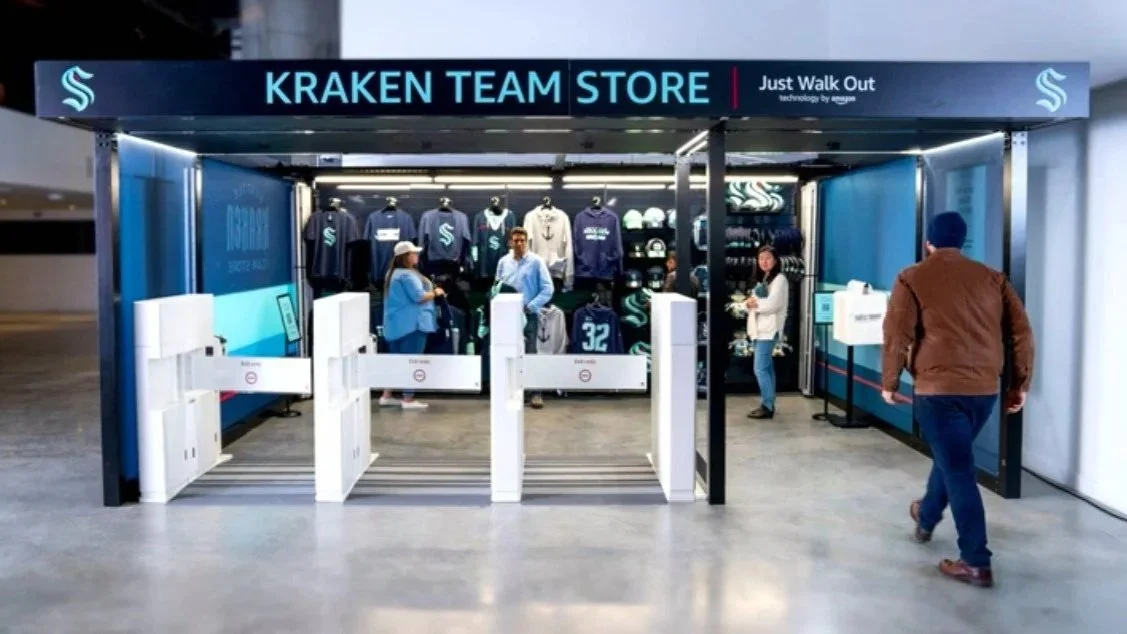
Kraken Team Store at Climate Pledge Arena — world's first checkout-free RFID merchandise store, 2023 · Source: AWS re:Invent 2024 BIZ226
Gen 1 Production: Lumen Field, 2023
Following CPA, Gen 1 launched at Lumen Field for the 2023–24 NFL season — the first RFID JWO store at an NFL stadium. Open-floor browsing with clothing on hangers, no packaging required. Fans grabbed gear, tapped to pay, and walked out. Five additional Gen 1 stores opened before transitioning to Gen 2 hardware.
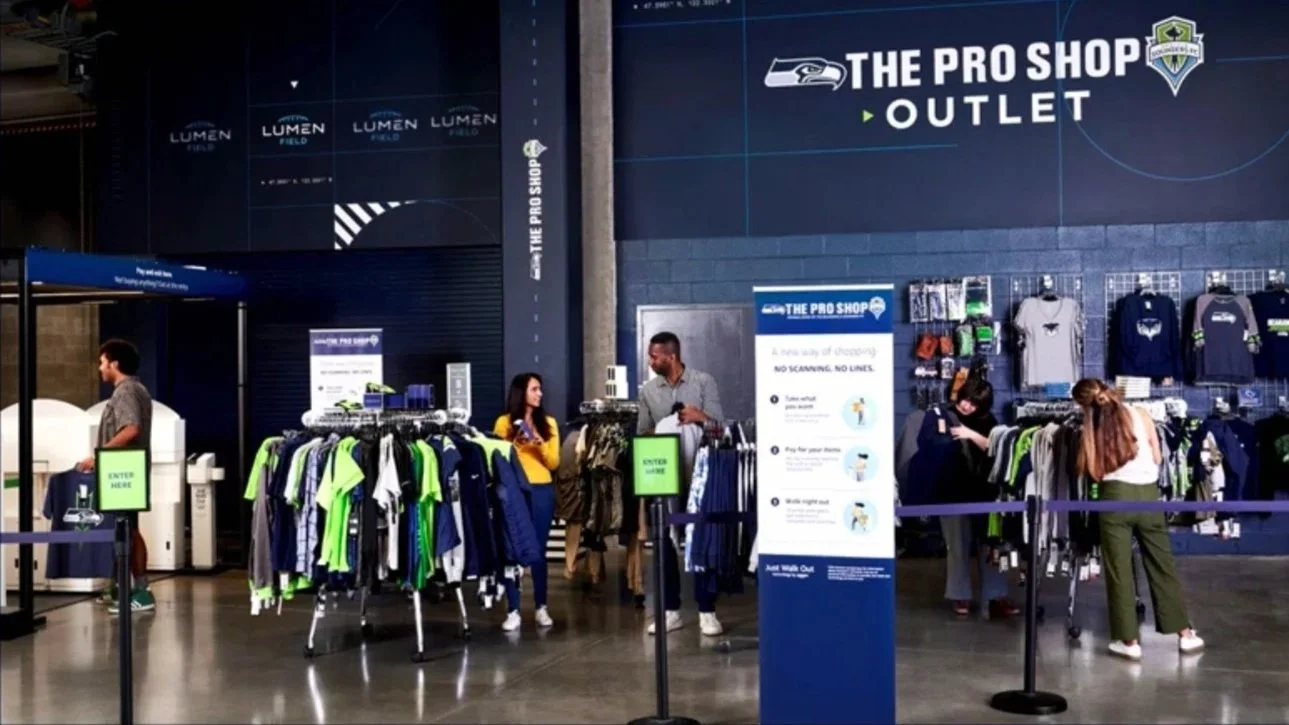
Kraken Team Store at Climate Pledge Arena — world's first checkout-free RFID merchandise store, 2023 · Source: AWS re:Invent 2024 BIZ226
Gen 1 Lane Architecture: Gen 1 used a portal-frame structure with a high density of RFID antennas — positioned to ensure read coverage accounting for varied tag orientations, RF-absorbing human body presence, and multi-lane attribution. The antenna placement and RF field geometry are shown below.
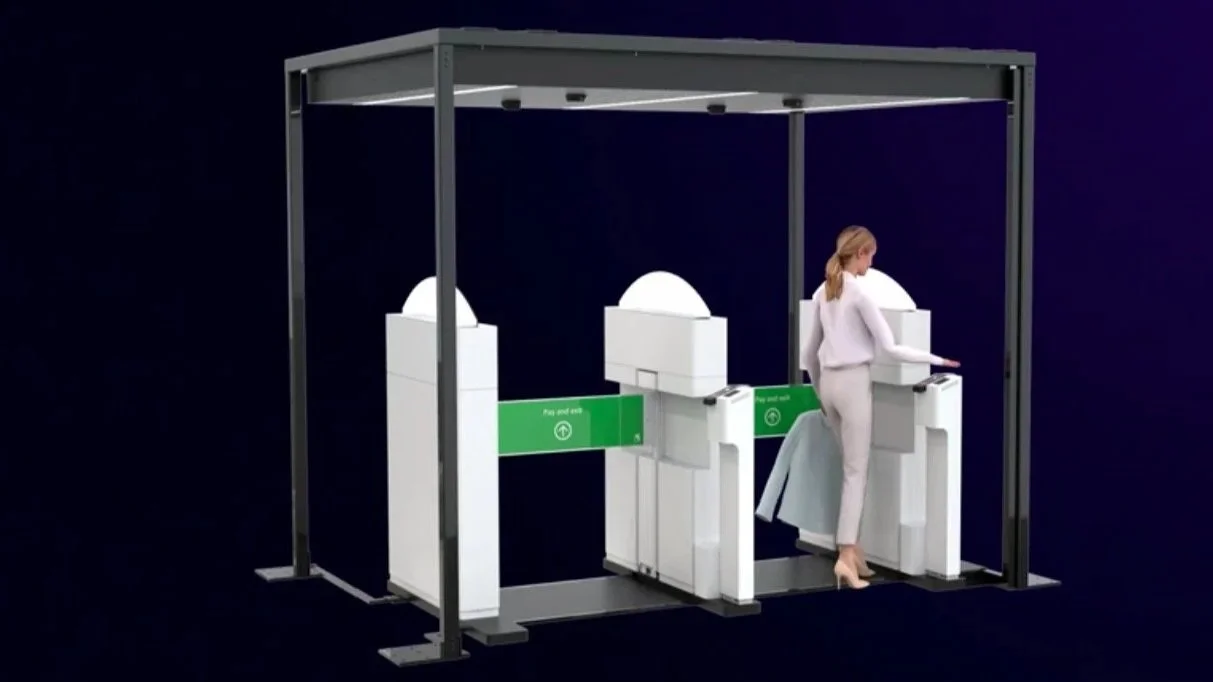
Gen 1 physical layout · Source: AWS re:Invent 2024 BIZ226
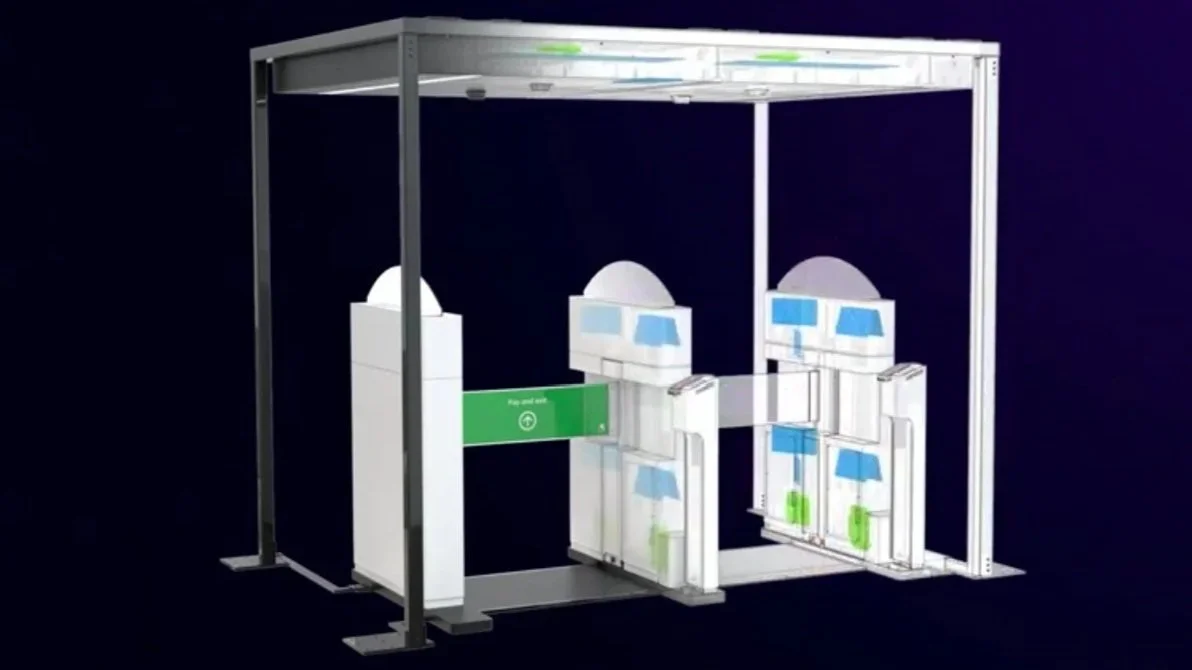
Gen 1 antenna array layout · Source: AWS re:Invent 2024 BIZ226
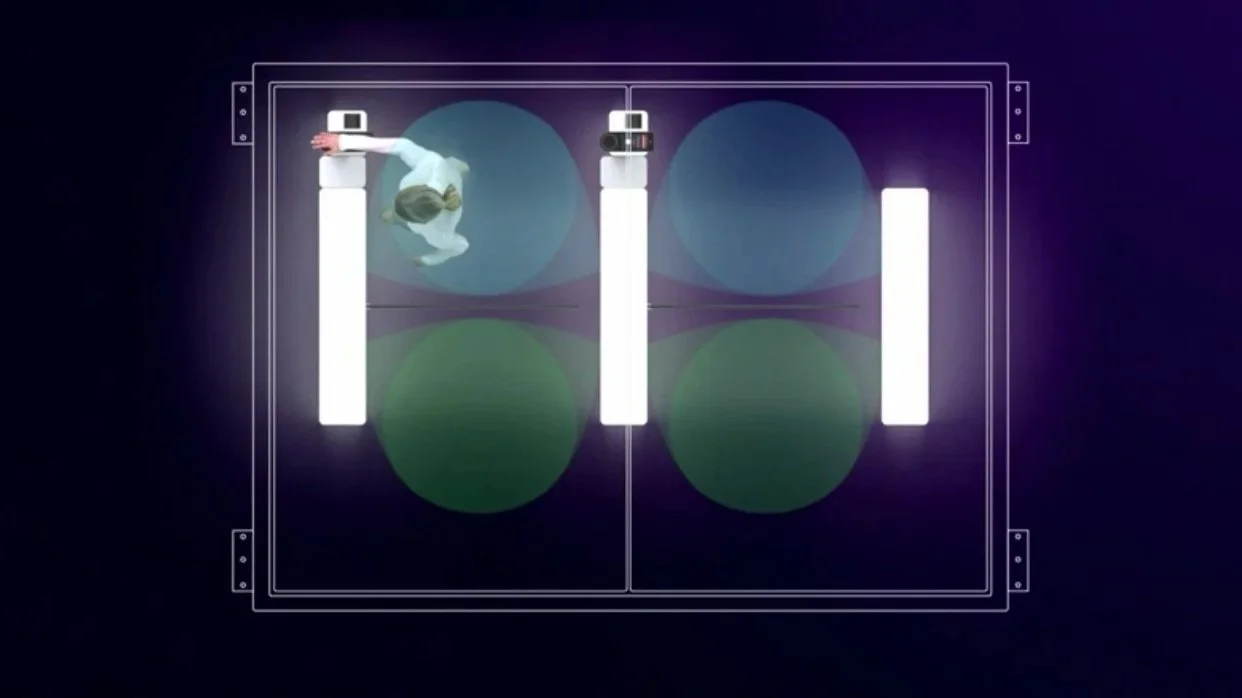
RF read zone visualization across dual checkout lanes (top-down) · Source: AWS re:Invent 2024 BIZ226
Gen 2 RFID lane
Gen 1 proved the concept and launched the business. Gen 2.0 was the ground-up hardware redesign that addressed what Gen 1’s architecture couldn’t solve at scale — and Gen 2.2 delivered the accuracy resolution that made commercial scaling viable. Three objectives drove the redesign: improve read accuracy with fewer antennas, make the lane portable enough to deploy at temporary venues, and reduce per-lane cost and installation labor.
RF architecture: Smart antenna algorithms replaced Gen 1’s density approach — fewer antennas, better field modeling, equivalent read coverage. This drove meaningful cost reduction at the hardware level while maintaining the read reliability the platform had built its reputation on.
Mechanical redesign — the tech pole: The primary mechanical challenge in Gen 2.0 was the tech pole — the self-contained structural column housing electronics, antennas, payment hardware, and cabling. This was the primary cost driver for the entire system and the component I owned as ME lead when the team was reduced mid-program.
Key design decisions I drove:
Articulating mast with soft-close damper — enables height adjustment and fold-down for transport while preventing abrupt movement that could damage electronics or cabling; designed for repeated deployment cycles
Cable routing through the articulating joint — routing power and signal cables through a moving joint without wear over hundreds of deployment cycles required custom routing geometry and strain relief approach
Outdoor thermal management — vented enclosure with active cooling architecture (dual fans, heat sink, directed airflow) designed to maintain operating temperature at outdoor venues while resisting rain and moisture ingress
Structural design for portability — the pole needed to be rigid enough for a permanent install and light enough to ship as a self-contained unit; drove DFM and DFA with the supplier through EVT
Delivered the tech pole to EVT at half the originally planned schedule, after absorbing full ME ownership mid-program.
Gen 2.1 — in-lane display and motorized gates: Gen 2.1 added an in-lane screen showing cart contents and running total before checkout completes, and motorized gates that open automatically on payment confirmation. Dynamic pre-authorization replaced the Gen 1 model where customers saw their receipt only after exiting. Customers now see their cart in real time before the gate opens. Each lane handles up to six transactions per minute — four times faster than traditional POS.
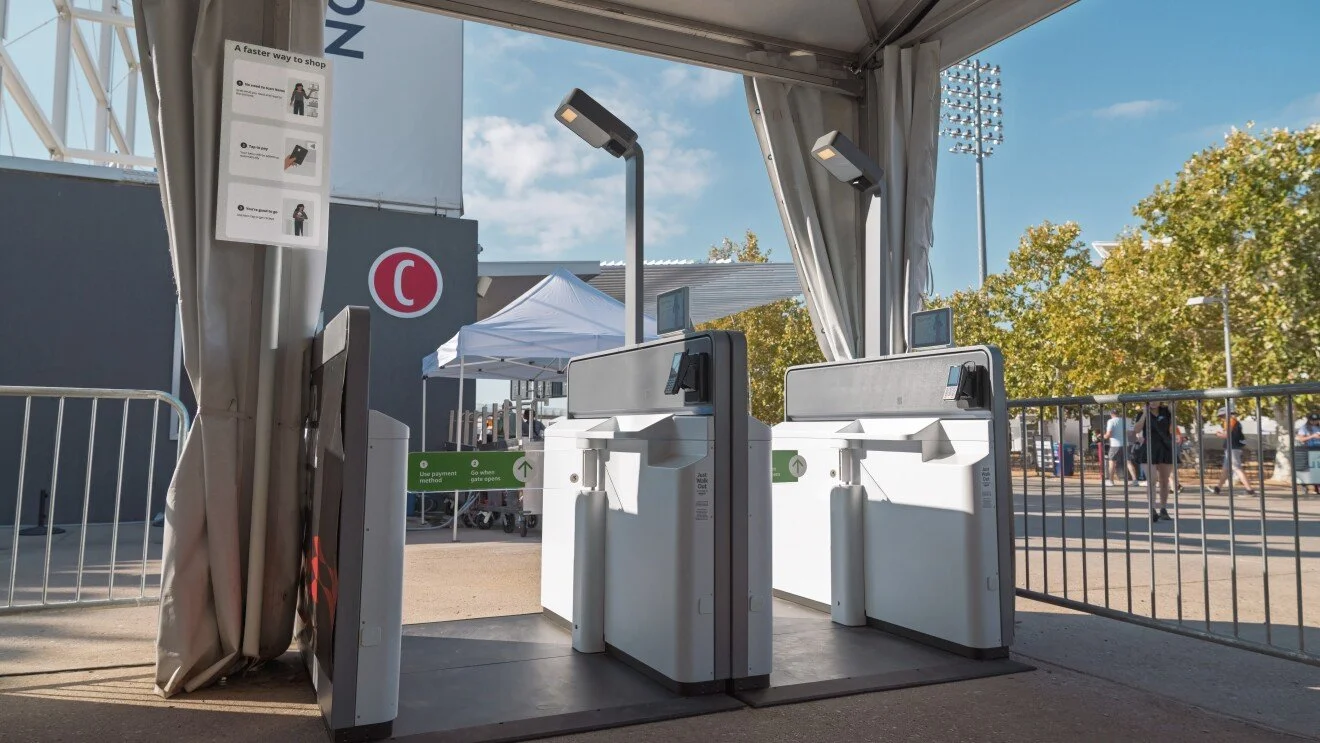
Gen 2.1 in-lane screen showing cart total before checkout — dynamic pre-authorization · Source: Amazon / aboutamazon.com
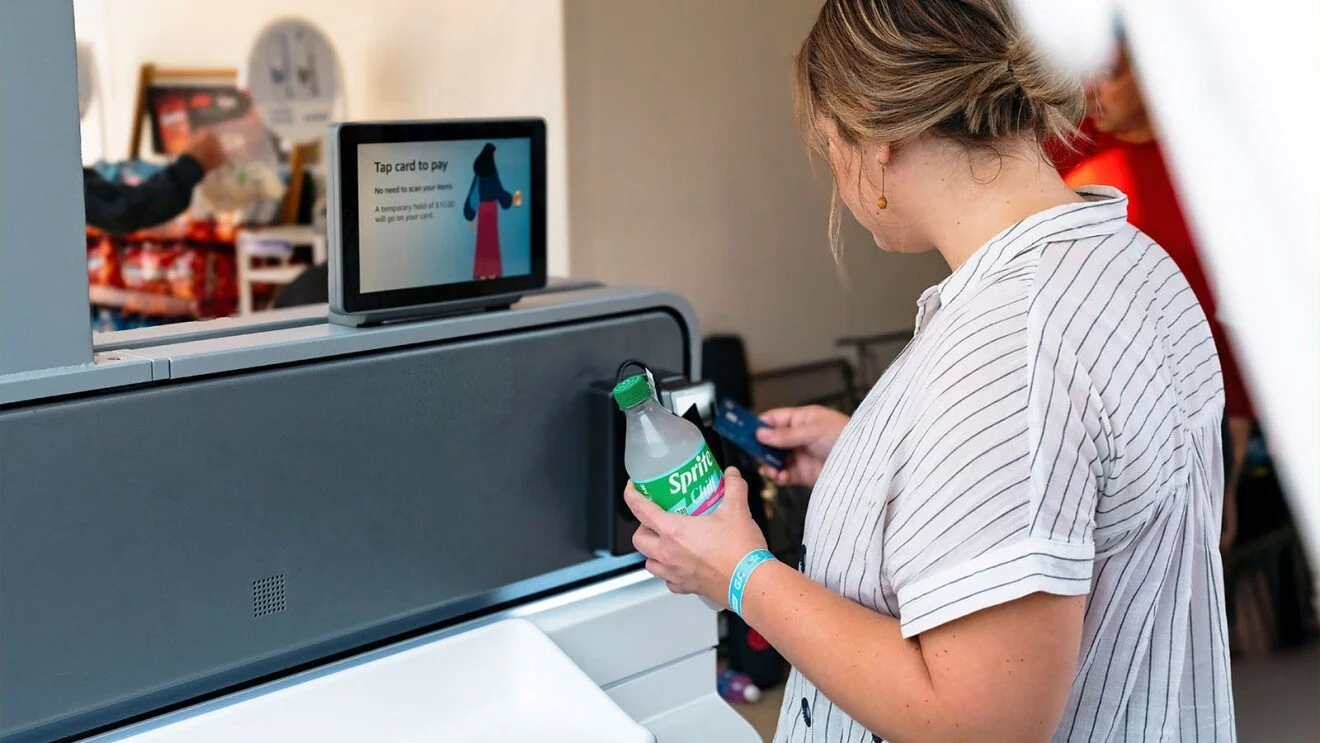
Gen 2.1 in-lane screen showing cart total before checkout — dynamic pre-authorization · Source: Amazon / aboutamazon.com
From Stadiums to Pop-Ups
Gen 2 lanes ship as self-contained units and deploy in hours — viable for concerts, racing events, and festivals without a permanent buildout. The portable platform architecture I designed for Gen 2.0 made this possible: the tech pole, gate, and payment hardware all break down to a transportable configuration with no on-site fabrication required.
Event pilots included Camp Flog Gnaw (Amazon Music merch) and Circuit of the Americas (Formula 1).
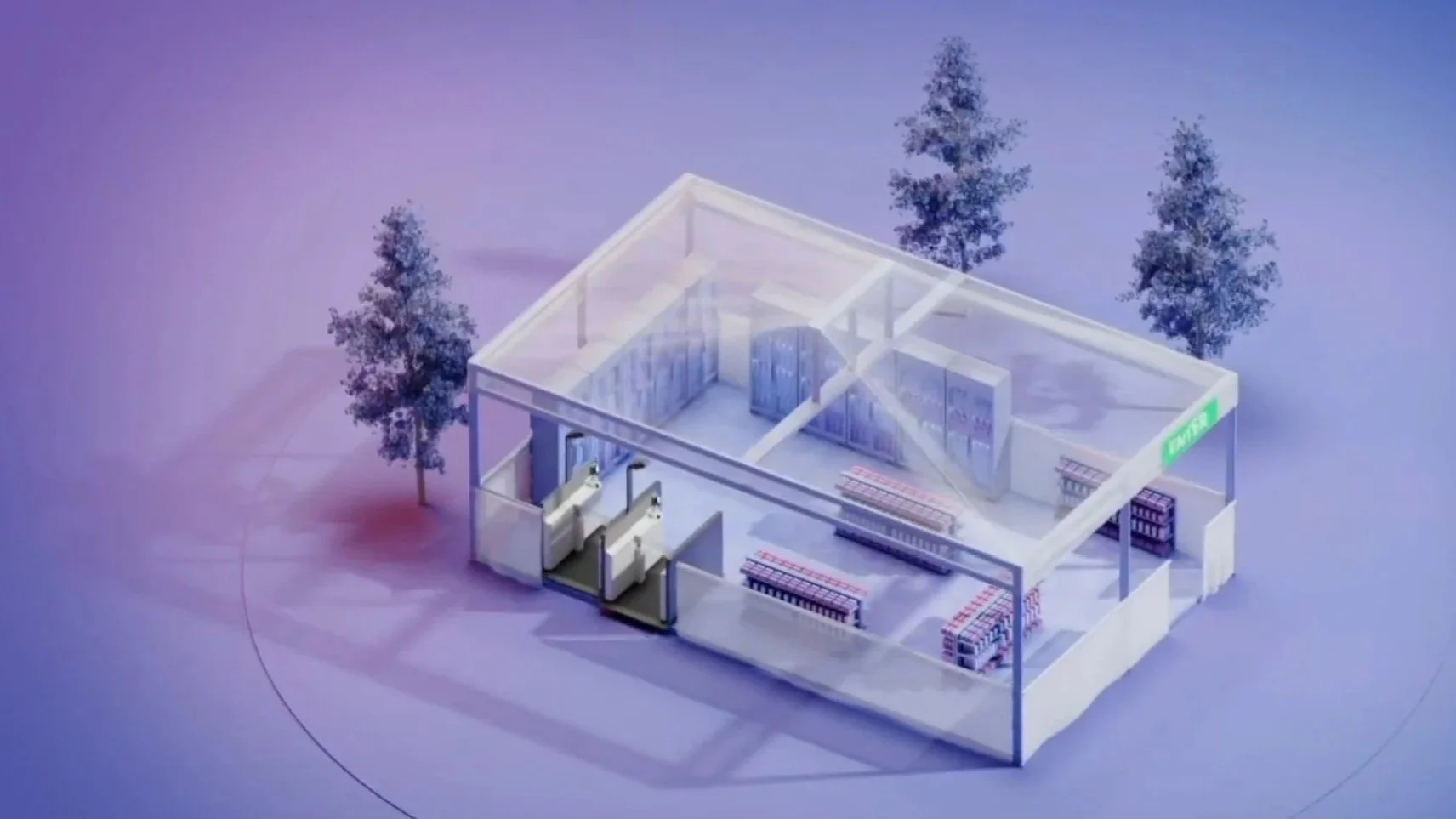
RFID pop-up store — deployable in hours for events and temporary retail · Source: Just Walk Out at NRF 2026
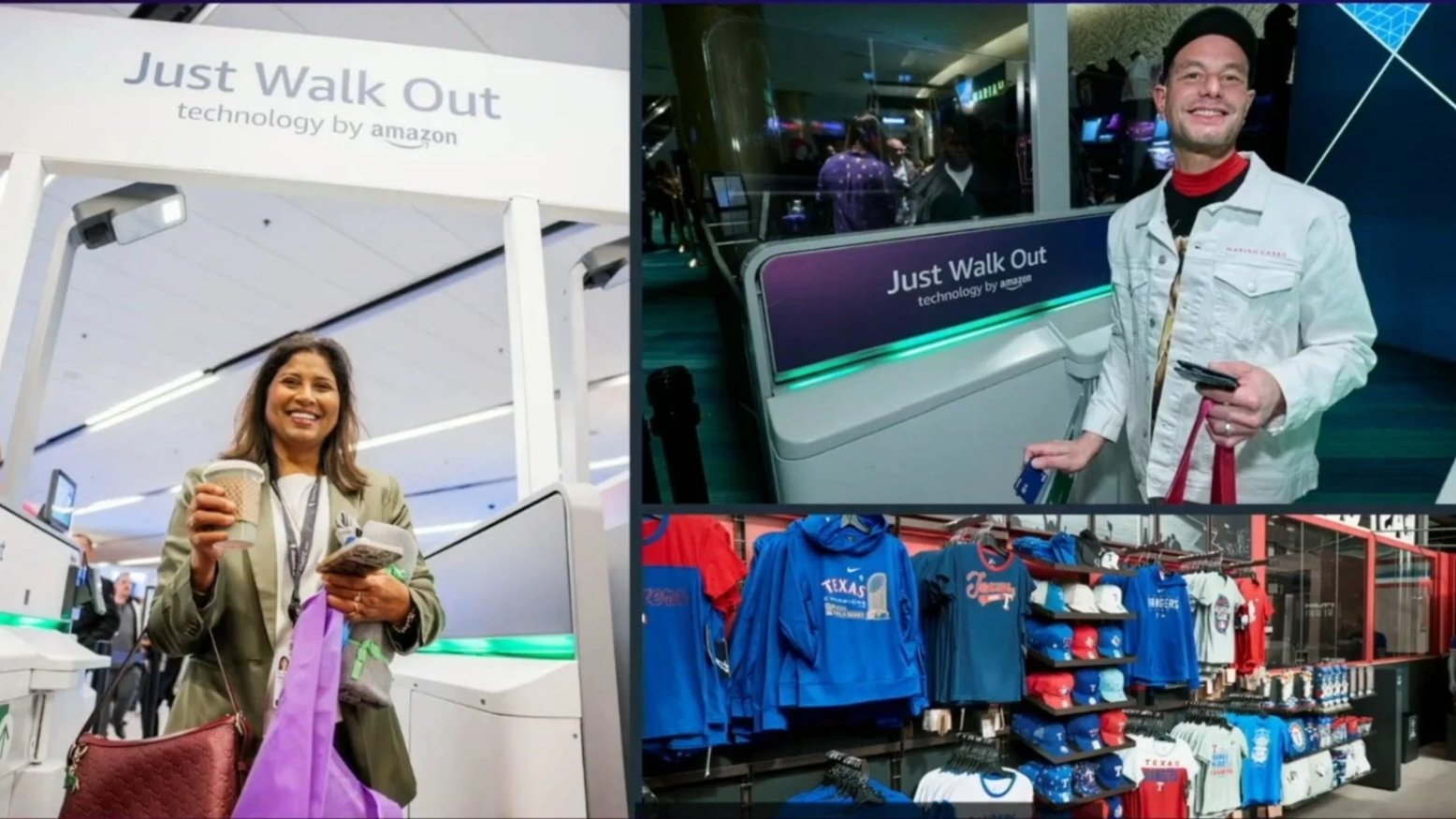
Gen 2 lanes across venue types: conference, concert, stadium · Source: Just Walk Out at NRF 2026
Extended Platform — Grocery & Multi-Modal
Beyond exit lanes, the RFID platform extended into higher-complexity retail environments. I led hardware architecture for an RFID self-checkout system showcased at NRF 2026 — a multi-sensor integration combining RFID with computer vision and ML for grocery-scale SKU environments. Drove concept to funded pilot in 6 months; secured VP-level investment. Named lead inventor on the Multi-Modal RFID System patent.
Separately, gondola-mounted RFID posts were tested for in-aisle item detection in live Amazon grocery environments — a different hardware form factor extending the platform into ambient sensing alongside computer vision and weight sensing.
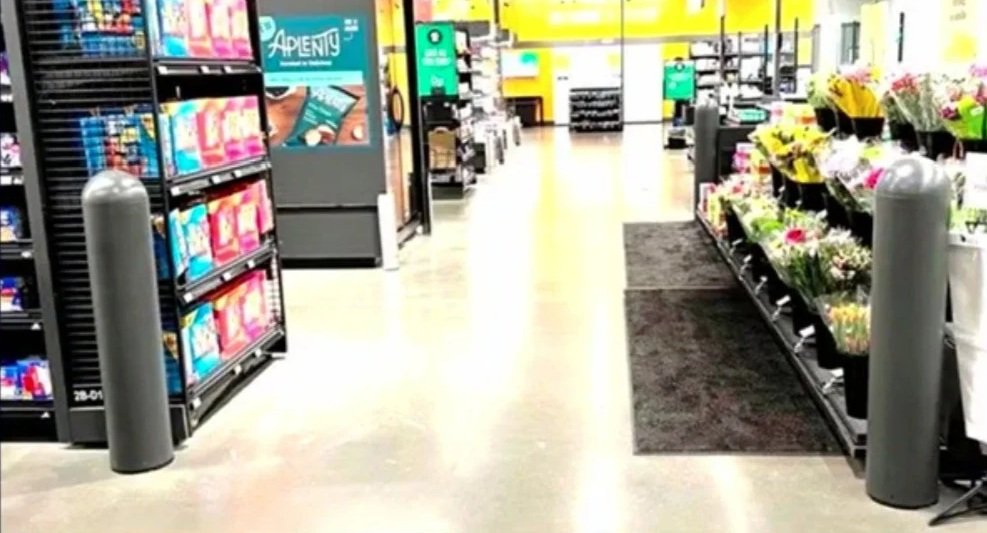
RFID tested alongside computer vision in a live Amazon grocery environment · Source: AWS re:Invent 2024 BIZ226
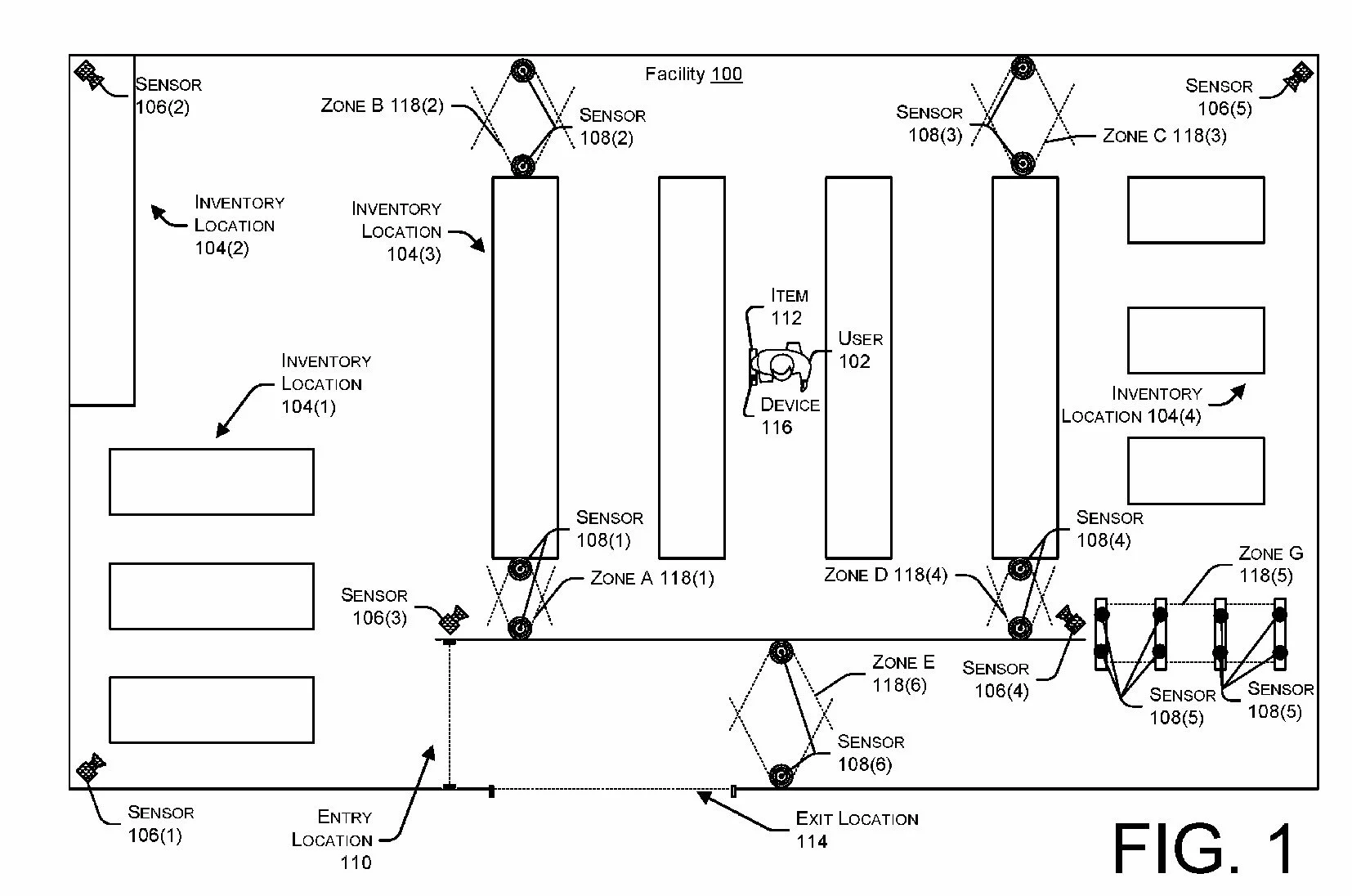
US Patent WO2024064163A1 — Customized retail environments (RFID gateway zones + vision system) · Lead inventor · Issued Mar 28, 2024
Patents
US12380425B1 — Increasing accuracy of RFID-tag transactions · Lead inventor · Granted 2025
US12417681B1 — Multi-Modal RFID System · Lead inventor
WO2024064163A1 — Customized retail environments · Lead inventor · Issued Mar 28, 2024
Additional filed applications — full portfolio at linkedin.com/in/mcdanielaaron